

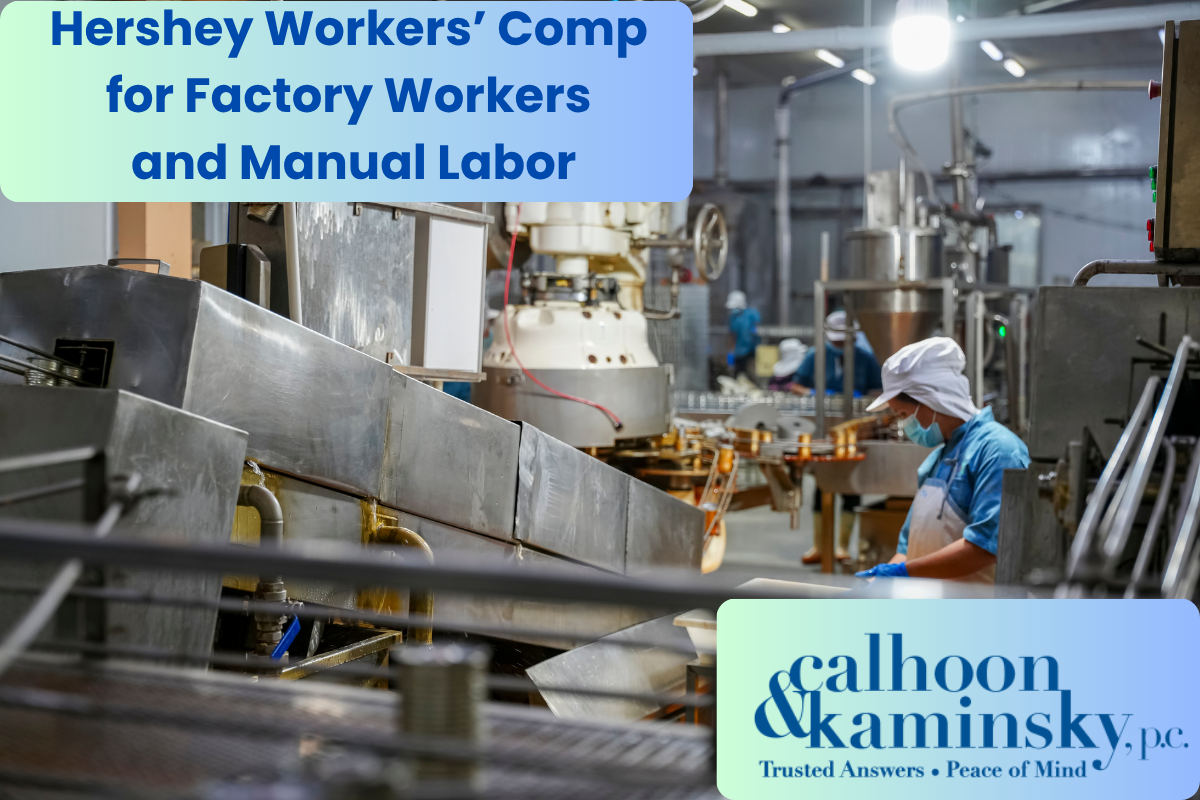
Factory workers and other manual laborers have some of the highest rates of work-related injuries across Pennsylvania, including here in Hershey. Moreover, working with or near heavy machinery means factory workers and others who do manual labor are more likely to sustain catastrophic, life-altering injuries on the job. While Pennsylvania’s workers’ compensation system provides significant financial assistance for injured workers, many companies fight these claims to avoid expensive payouts.
Calhoon & Kaminsky PC has extensive experience handling factory laborer workers’ compensation claims and can fight to ensure your employer provides your benefits after an on-the-job injury. Our firm focuses solely on work injury cases, giving us in-depth experience with this complex area of the law. We can handle all the legal work while you rest and heal, and we can determine if you might qualify for additional compensation through a personal injury claim. Call now or complete our contact form for a free consultation. You pay no attorney fees unless we recover compensation for you.
Navigating Workers’ Compensation Claims After a Factory Workplace Injury in Hershey, PA
Hershey factory laborer workers’ comp claims can be complicated, but the basic steps of your claim include:
- Reporting the Injury – If you haven’t already, tell a supervisor about the accident as soon as possible. Submit your report in writing, and give precise details about where you were working, what you were doing, and how the injury occurred. Pennsylvania law requires you to report your injury within 120 days to preserve your workers’ comp benefits, and quick notice can help limit time-consuming disputes.
- Getting Medical Care – Seek medical treatment from a doctor right away, even if you feel fine. You may need to see a doctor that your employer chooses, though this rule doesn’t apply to emergency treatment. Once you see a doctor, make sure you follow their advice and attend every appointment. Consistent care creates records that connect your injury to factory work.
- Filing the Workers’ Compensation Claim – Submit the claim to your employer, and make sure it includes accurate facts about your job duties, wages, and injury. Any errors or gaps can slow down the claim process. Keep copies of every form and note the dates you send them.
- Documenting the Impact on Your Work – Track any missed shifts, light-duty limits, and pain that affects your ability to do your job. It’s also smart to write down any changes supervisors make to your schedule or duties.
- Waiting for Your Employer’s Decision – Once you submit your claim for benefits, your employer and their insurer will review it and decide whether to pay you any benefits. Ideally, your employer will accept your claim, meaning you should receive your benefits shortly thereafter. If you start receiving weekly benefit checks (which typically equal two-thirds of your average weekly wage), compare the payments to your usual earnings and report delays or shortfalls right away. Your employer/workers’ comp insurance carrier typically has 21 days to accept or deny the injury.
- Responding to Insurer Actions – Your employer or their insurer might ask for additional information before deciding whether to accept your claim. Respond to any requests for statements, exams, or records promptly to avoid delays.
- Contesting a Denied Claim – If your employer denies your claim, you have the right to appeal their decision. Make sure you talk to a Hershey workers’ comp lawyer if this happens, as an attorney can help you gather additional evidence and push back against the insurance company’s reason for denying your claim. Injured workers must contest the denial within three years of the date of injury.
Common Factory and Industry Worker Injuries
Common work-related injuries among factory workers and other manual laborers include:
- Repetitive Motion Injuries – Factory work often requires the same movements throughout each shift. Repeated lifting, gripping, twisting, or reaching can strain muscles and joints over time. These repetitive motions can cause shoulder damage, wrist injuries, tendon problems, or chronic back pain.
- Slip-and-Fall Injuries – Production floors often include wet surfaces, loose debris, poor lighting, or crowded walkways. These conditions increase the risk of falls that can lead to broken bones, knee injuries, head injuries, or spinal cord damage.
- Machinery-Related Injuries – Working with or near heavy equipment and production machinery involves significant risks even when workers follow safety rules. Equipment malfunctions, missing guards, and rushed production demands can lead to injuries like crushed limbs, amputations, deep cuts, or severe burns.
- Lifting and Overexertion Injuries – Many factory and warehouse jobs require workers to move heavy materials throughout the day. Improper lifting, limited recovery time, or sudden strain can cause muscle tears, herniated discs, and lasting back injuries.
- Struck-by Injuries – Workers in factories may suffer injuries when tools, materials, or equipment fall or shift unexpectedly. These incidents often result in fractures, head injuries, or soft-tissue damage.
- Noise-Related Injuries – Prolonged exposure to loud machinery in factories can cause long-term damage to workers’ hearing.
- Chemical and Airborne Exposure Injuries – Some factory workers are exposed to chemicals, fumes, or dust. These exposures can cause breathing problems, skin reactions, or eye injuries that worsen with continued exposure.
Special Considerations for Manual Labor Work and Factory Work Injuries
Manual labor and factory jobs place constant physical stress on the body, leading to issues that do not occur in office-based positions. Similarly, many factory work injuries develop over time rather than from a single accident. Repetitive tasks, long shifts, and production quotas can worsen joint damage, back injuries, and soft tissue conditions.
Another issue in these cases is that workers often feel pressure to keep working through pain, causing them to delay treatment and complicating a claim. Factory workers also face closer scrutiny from insurers, especially when injuries involve gradual wear, prior conditions, or return-to-work disputes.
Finally, light-duty assignments after a factory injury may not align with an injured employee’s physical limitations, even when a doctor sets restrictions. Accurate medical records, clear job descriptions, and consistent reporting matter in these cases, as does support from an experienced attorney.
What Does Hershey Workers’ Compensation Cover?
Workers’ compensation benefits for a factory or manual labor injury can include:
- Medical Benefits – Workers’ compensation pays for all reasonable and necessary treatment related to your injury. These benefits cover the full cost of doctor visits, hospital care, surgery, prescriptions, physical therapy, and medical equipment tied to the work injury.
- Wage-Loss Benefits During Time Off Work – If your injury fully prevents you from returning to work while you heal, workers’ compensation provides partial wage replacement benefits. Benefits pay two-thirds of your average weekly wage before the injury, up to specific legal limits.
- Specific Loss Benefits for Permanent Damage – Certain injuries, such as the loss of a limb, vision, or hearing, may qualify for specific benefits under Pennsylvania law.
- Partial Disability Benefits for Reduced Earning Ability – If you have a permanent injury but can still work in some capacity, workers’ compensation can help cover the gap between your pre-injury wages and current earnings.
- Total Disability Benefits for Catastrophic Injuries – Severe injuries that block any return to work may qualify you for ongoing wage-loss benefits.
- Death Benefits for Surviving Family Members – In cases involving fatal injuries and accidents, workers’ compensation provides wage-related benefits to eligible dependents to help cover the cost of a funeral and burial.
When Should I Return to Work After an Injury at My Factory Job?
When you should return to work after a factory injury depends on your medical guidance and your job’s demands. Your doctor should set clear work limits based on your injuries and recovery progress.
Returning too soon can worsen symptoms or lead to a new injury. Light-duty work may sound reasonable, but it must match your physical limitations. Track your pain levels as you return to work, and report any problems promptly.
When to Call a Workers’ Compensation Attorney After a Workplace Accident
It’s best to contact a workers’ compensation lawyer from Calhoon & Kaminsky PC immediately after starting medical treatment for your injury. Your attorney can help you avoid mistakes early in your claim that could delay your benefits or lead to an outright denial from your employer.
If you don’t call a lawyer immediately after your injury, you should seek legal support if your employer denies your claim, you aren’t receiving your full benefits, or you have questions about your claim. Your lawyer can address these issues and make sure your employer pays your rightful benefits under Pennsylvania law.
How a Hershey Workers’ Compensation Attorney Representing Factory Workers Can Help You
A Hershey workers’ compensation attorney from Calhoon & Kaminsky PC can guide you through each stage of your claim and address any problems that arise. To start, we’ll review your medical records, job duties, and wage history to confirm that your claim reflects the full impact of your injuries. If an insurer questions the cause of an injury, delays payments, or limits your medical care, we can present additional evidence and file formal appeals.
Our team can also address return-to-work disputes, including light-duty roles that exceed your medical limits. For injuries that affect long-term earning ability, we’ll pursue the correct level of wage-loss benefits.
Contact Our Experienced Factory and Manual Labor Workers’ Comp Attorneys Today
Acting quickly after an on-the-job injury is the best step you can take to protect your workers’ comp benefits in Pennsylvania. Call Calhoon & Kaminsky PC now or complete our contact form for a free consultation.